Whole foods provide not only certain amounts of basic nutrients in the natural proportion to each other; the nutrients in them are also bound together by that subtle energy that animates all living systems. ~Annemarie Colbin
Diets
There are too many different “diets” now to mention here. Food has almost become a scary thing. We need to start moving away from seeing food as a threat and worrying a lot about it.
Food is not a threat. Industrialized food is. So, very simply, avoid processed food.
Any food that looks like it did when it grew is unprocessed food, but it’s not just about looks. It’s also about chemicals and agricultural practices.
Unprocessed food is unaltered food, for the most part. There are some exceptions.
This means that organic is best because chemicals should be eliminated. It means that food should be as untreated as possible — not irradiated, not heated, unbleached, not colored, not sweetened, etc.
Rather than eating a slice of apple pie, eat an apple. Even though apple pie can be made out of healthy ingredients, when it’s handled and heated and sugar has been added, a lot of food value has been destroyed.
We want nutrient-dense food, and for that we need to be aware that food is made to nourish our bodies in the form it comes in.
A whole food diet is best.
Sugar
Added sugar in processed foods is the element that causes heart disease.
Going sugar free is good, but using chemical sweeteners would break the whole food rule. A lot of people would suggest using honey and maple syrup because they qualify as whole foods. They do have nutritional value, and some people may be fine with those options. However, some people have a switch that turns on at the taste of sweeteners and they begin to crave more, regardless of how much they eat. Even 1tsp can ignite a metabolic storm for some people. For that reason, organic Monkfruit sweetener or stevia may be a better option because they don’t raise blood sugar, and they are also natural sweeteners. They need to be organic and not processed. Monkfruit that you buy at a grocery store has erythritol in it, which is alcohol, so that isn’t good. And stevia bought at a grocery store is highly processed and has added ingredients to make it white and powdery. Organic dried stevia leaf is the only stevia that I would recommend. A tiny amount goes a long way!
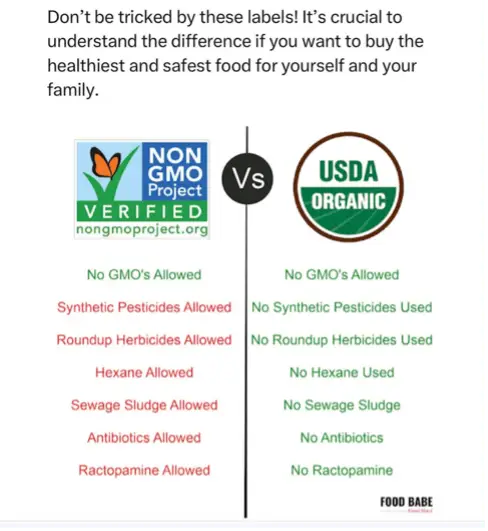
What do all the labels mean?
USDA organic certificate:
- No irradiation, sewage sludge, synthetic fertilizers, prohibited pesticides, and genetically modified organisms were used.
- Animal health and welfare standards were met – no antibiotics or growth hormones, 100% organic feed, and animals had access to the outdoors.
- Dairy sourced from pastured cows for the full-length of the growing season.
- Products containing multi-ingredients are 95% or more certified organic. If a specific ingredient is labeled organic, that single ingredient is 100% organic.
- https://www.usda.gov/about-usda/news/blog/organic-101-what-usda-organic-label-means
Organic farms and processors:
- Safeguard natural resources and preserve biodiversity
- Protect animal health and welfare
- Provide outdoor access so maintain natural animal behaviors
- Use approved materials
- Eliminate GMO materials
- Are inspected annually
- Keep organic food separate from non-organic
What does grassfed mean?
- Majority of nourishment is from feeding on grass.
- Does not restrict the use of pesticides, antibiotics, or hormones.
- Organic, grassfed meat is best
- Grassfed beef, bison, lamb, and goats have less total fat, saturated fat, cholesterol, and calories than factory-farmed meat.
- Grassfed meat also contains more vitamin E, 𝛽-carotene, vitamin C, and healthy fats, such as omega-3 fatty acids and conjugated linoleic acid (CLA).
Is organic better?
- Grassfed meat has higher levels of healthy omega-3 and CLA fatty acids,
- Conventionally farmed and processed meat contains harmful fats.
- Organically grown plant foods have less pesticide residue.
- There are nutrient differences between organic and non-organic, however, these are not very significant, according to research.
Genetically Modified (GMO):
- DNA has been modified.
- A gene from another organism may have been introduced.
- Originally, GMO foods were exclusively plant foods. Now they include microorganisms or GMO animal products grown from harvested cells.
- It has become important to understand where these foods come from and how they are produced.
- Say No to GMOs website
Rules for What to Eat:
- Avoid foods with more than 5 ingredients.
- Any ingredient you can’t pronounce.
- Anything artificial.
- Health claims on the front of the package are just marketing. Avoid foods that make claims like “all natural.”
- Foods with cartoons on the package are being marketed to kids
Tips for shopping at a grocery store
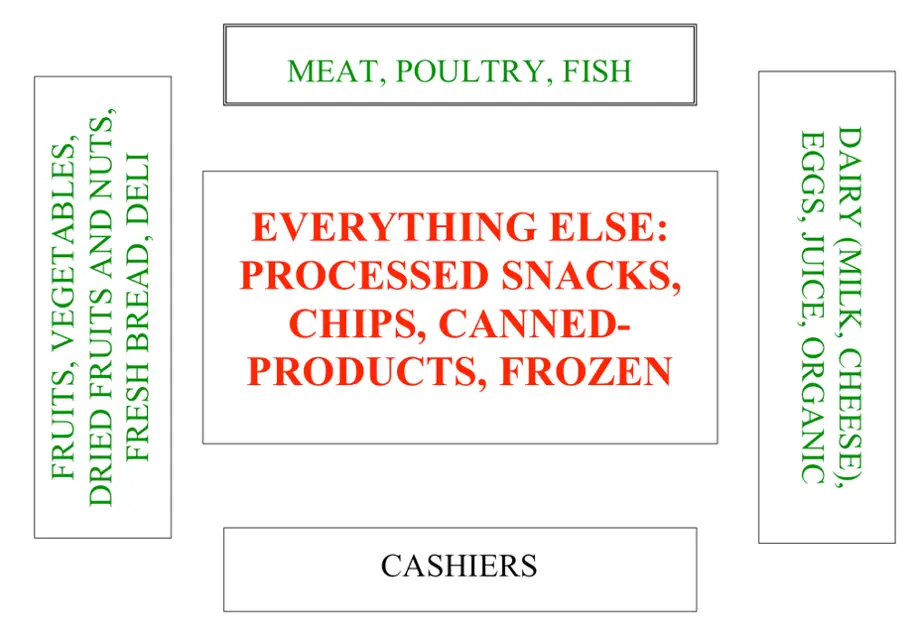
Unless you need baking supplies or cleaning supplies, most whole foods are found around the outer edges of a store.
How to read a food label
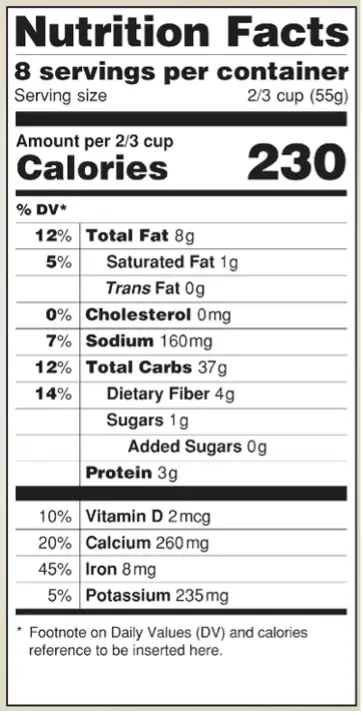
- Sugar: No more than 10g/day.
- Carbohydrates: Keep total carbs 100g or less per day to avoid blood sugar spikes. Some people may need to stay between 25g – 50g (Keto)
- Protein: Each meal should contain around 30g of protein in order to meet daily requirement of around 90g. Protein is figured by ideal body weight, but the minimum is about 90g/day for an average adult woman.
- Trans fats should be zero.
- Ingredients: Avoid seed oils, such as canola oil, sunflower oil (unless you know the source), safflower oil, rapeseed oil, etc. (Eat only olive oil, tallow, lard, butter, ghee, avocado oil, coconut oil)
- https://www.fda.gov/food/nutrition-facts-label/how-understand-and-use-nutrition-facts-label
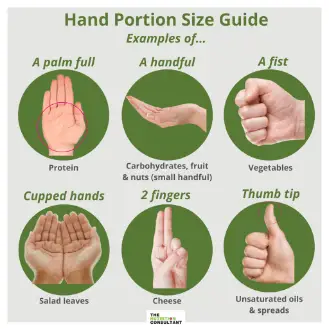
Food Portion Guide for a balanced meal